Special Angels Investments: Zion Cemetery
An interactive memorial to Tampa's oldest known African American cemetery — erased under Jim Crow, rediscovered in 2019, and honored across web, AR, and VR. I led the creative direction, co-art directed, visual storytelling, and UI/UX systems.
Recognition: Vega Digital Awards — Gold · Hermes Creative Awards — Platinum
Overview
Zion Cemetery was established in 1901 to serve Tampa's thriving Black communities of Dobyville and Robles Pond. Within decades it was illegally taken, erased from maps, and buried beneath a whites-only housing project. In 2019, ground-penetrating radar confirmed what descendants had long known: an estimated 382 people still rest beneath Robles Park Village.
Our task was to transform this history into a living memorial — an experience descendants could enter, learn from, and carry forward. The result spans three platforms: a fully interactive WebGL journey, a mobile AR experience placed on the land itself, and an immersive VR story guided by spoken word.
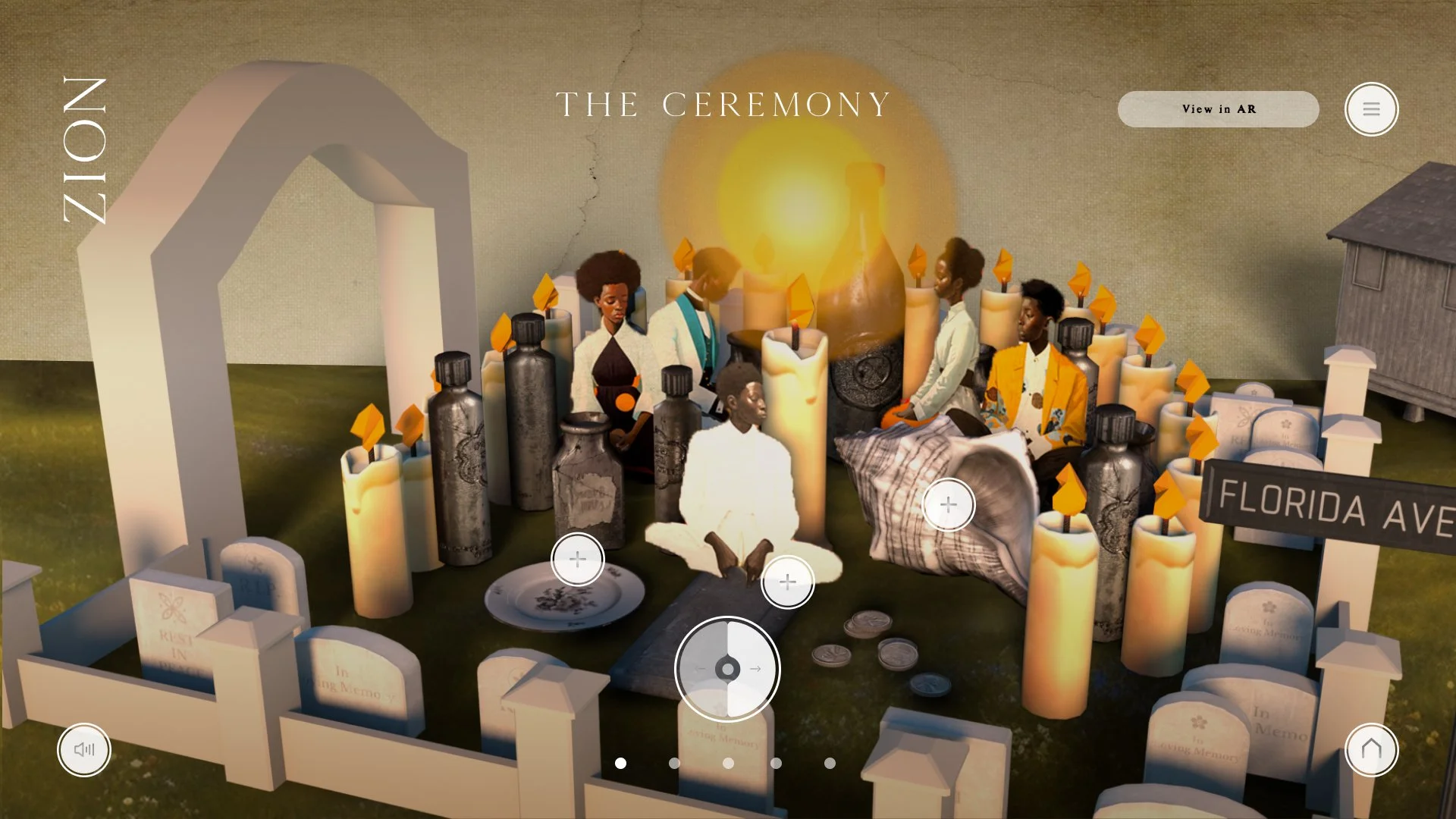
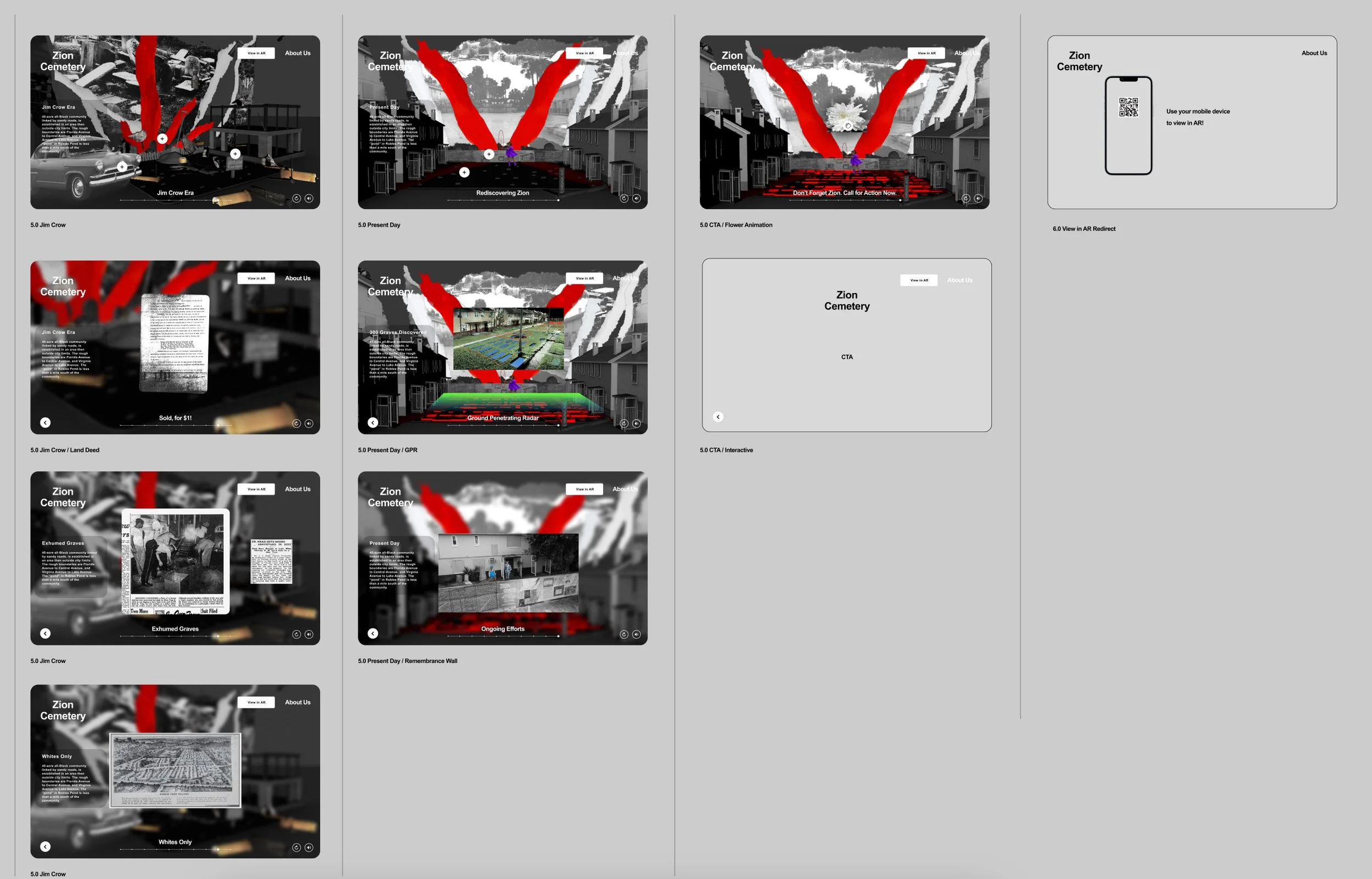
Each interactive scene was a living exhibit, with stories woven into the very fabric of every image and document. Here, narratives were not just displayed but waited to be uncovered by the user.
The Challenge
How do you design something beautiful about something brutal?
Every visual decision carried weight. The experience needed to hold grief and reverence without becoming unbearable, and to teach hard history without flattening it into a lecture. Working from ceremonial artifacts, unarchived newspaper clippings, and witness accounts, we built a visual language that lets memory — not tragedy — lead.
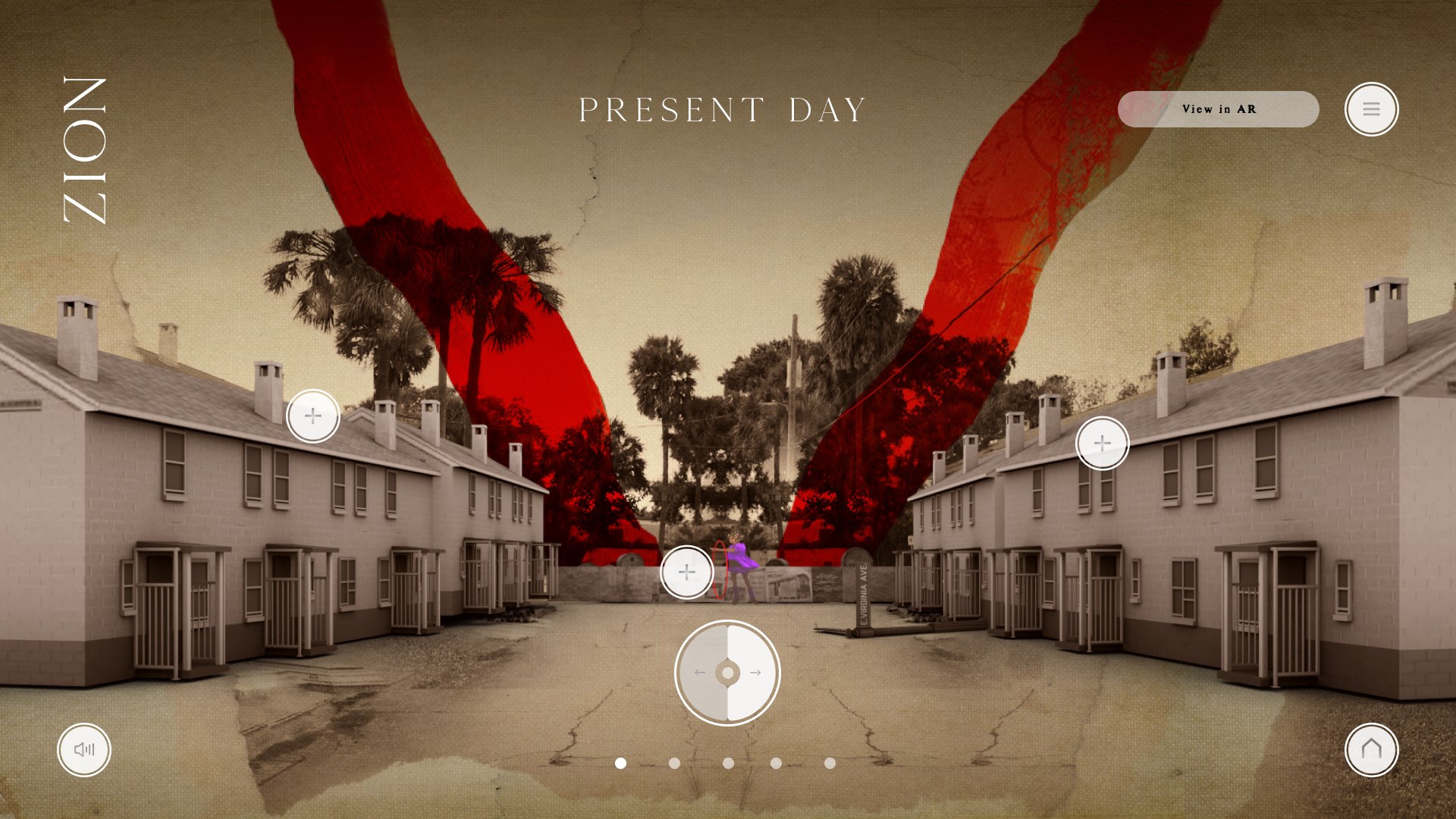
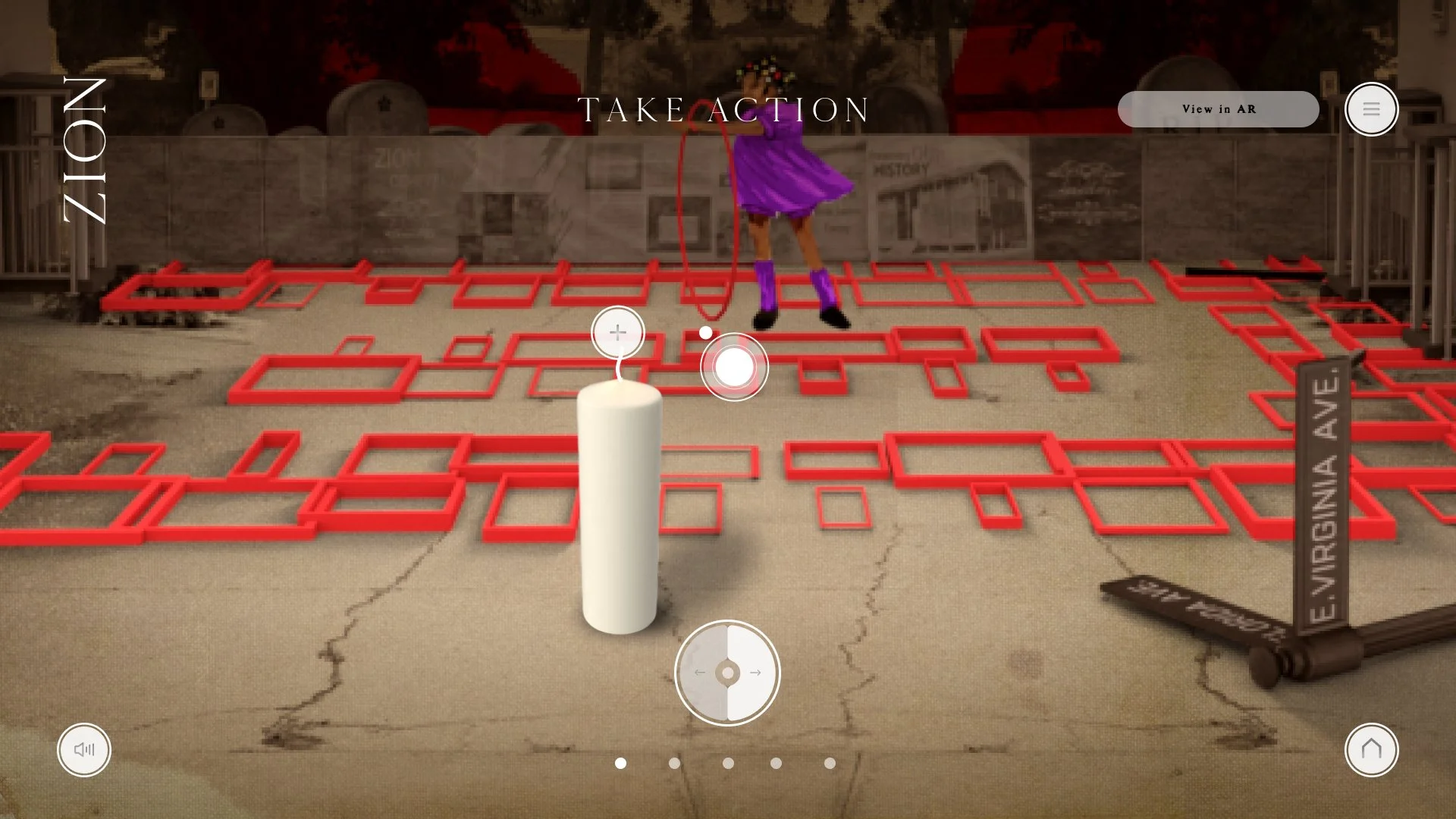
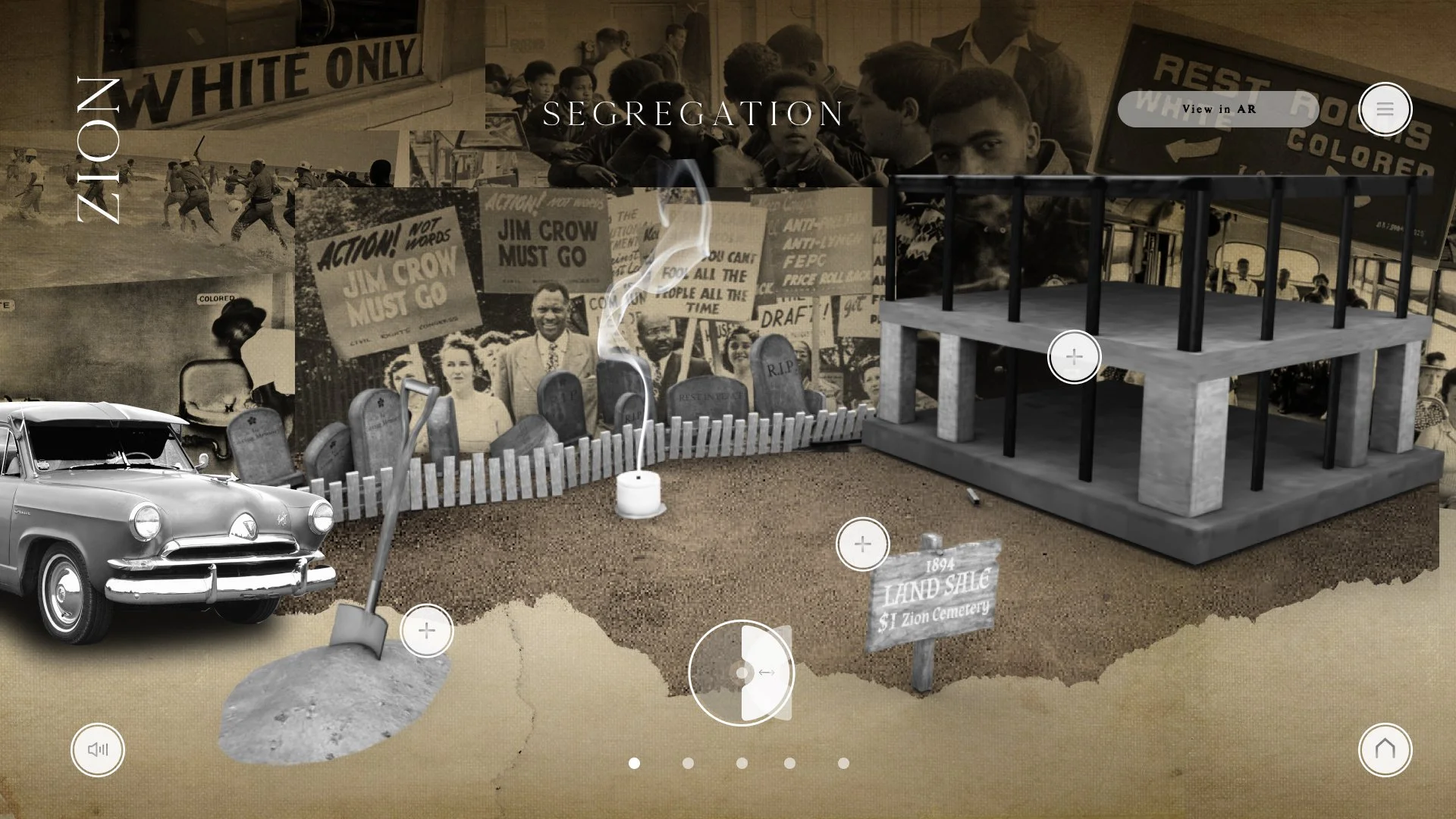
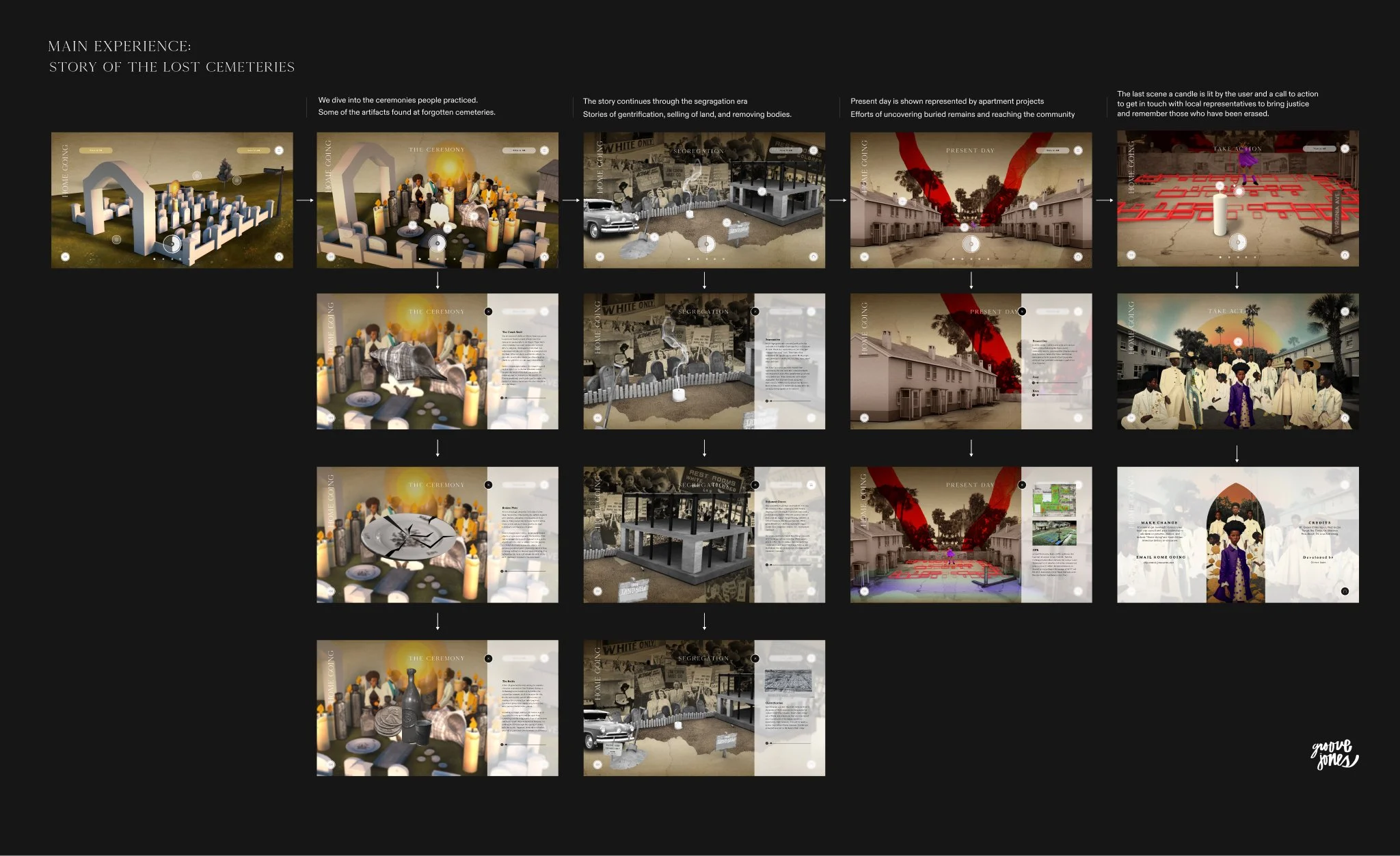
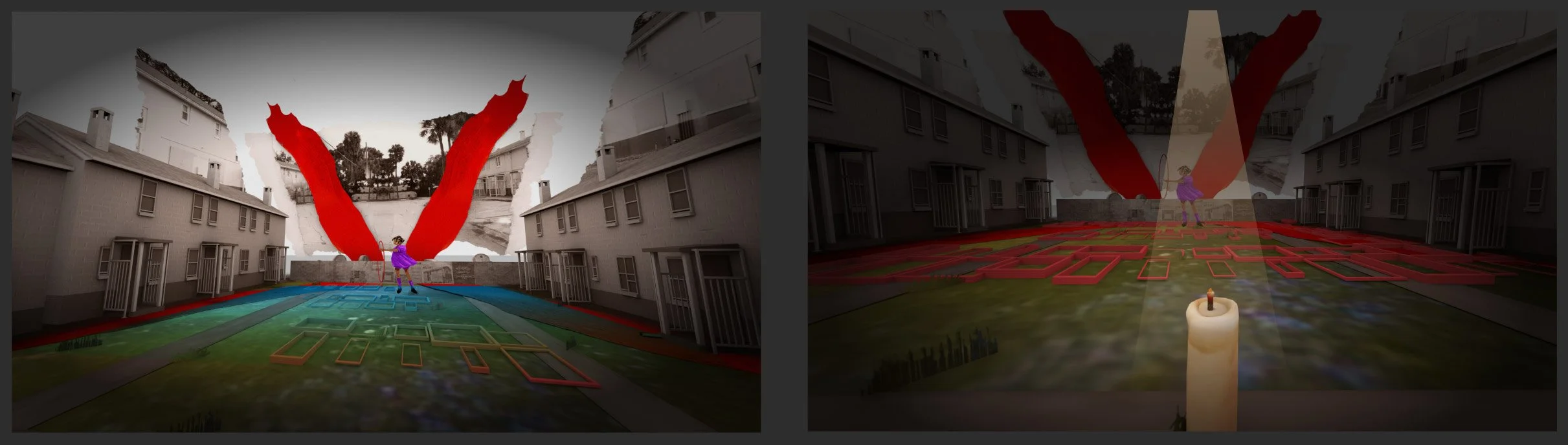
The art direction pairs archival truth with symbolic imagery. A recurring figure — a girl in a purple dress, jump rope in hand — represents the lives and childhoods lived on this land. Bold red brushstrokes and maze-like pathways cut across desaturated present-day photography, marking the cemetery's hidden footprint beneath the modern neighborhood. Mixed-media collages layer sepia photographs, protest signs, and physical artifacts into dimensional dioramas of each era.
Building the Visual Language
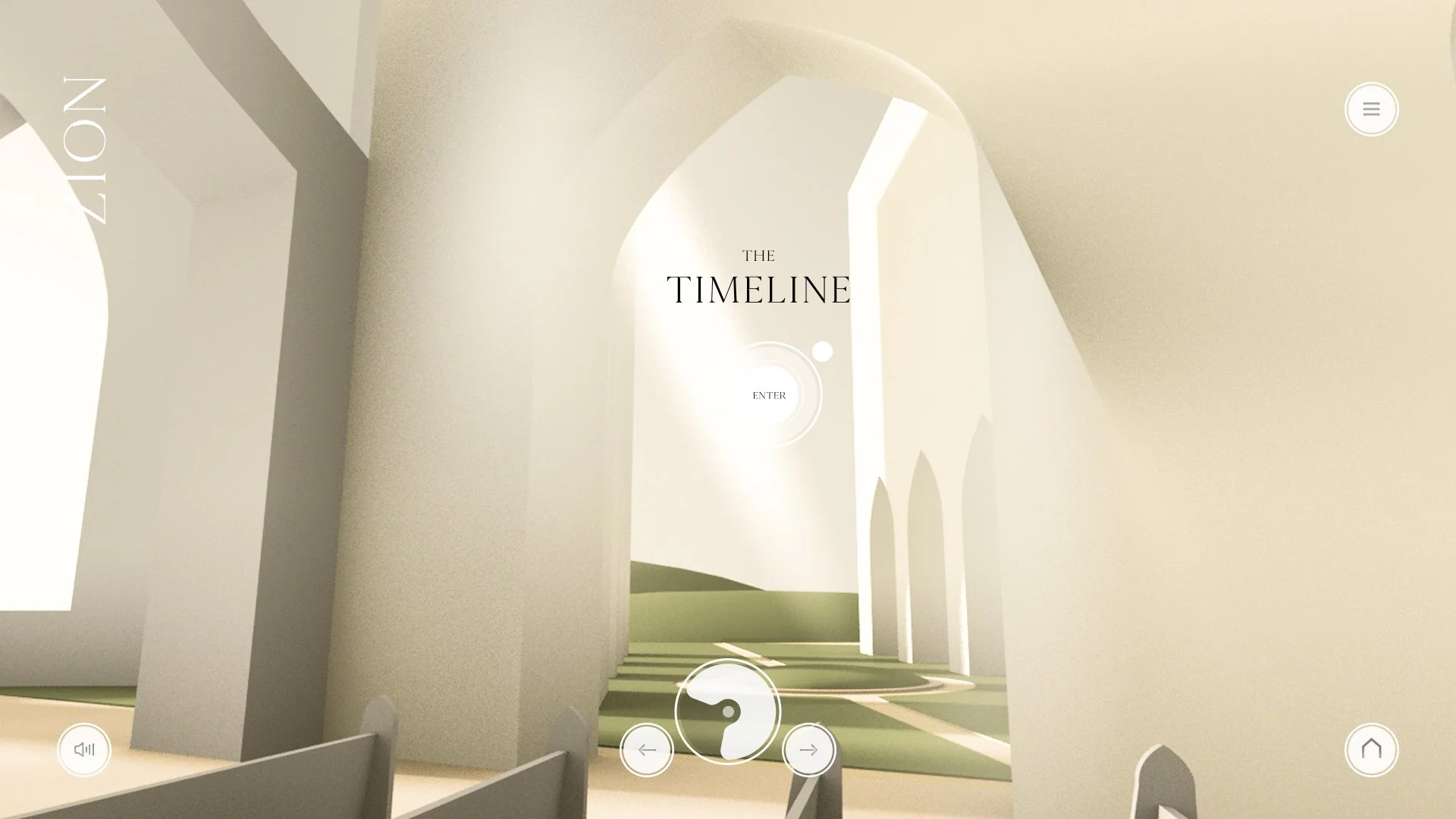
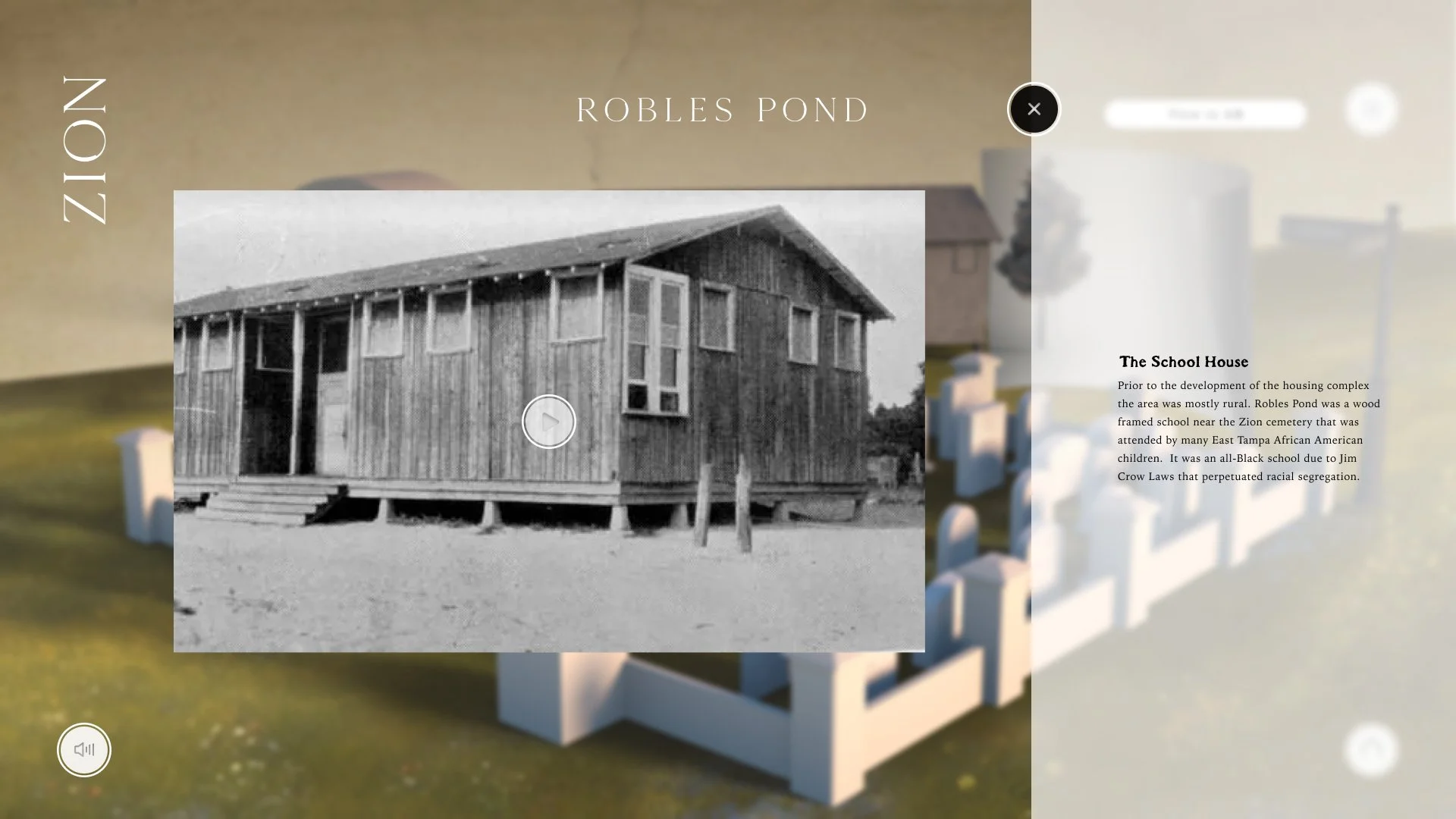
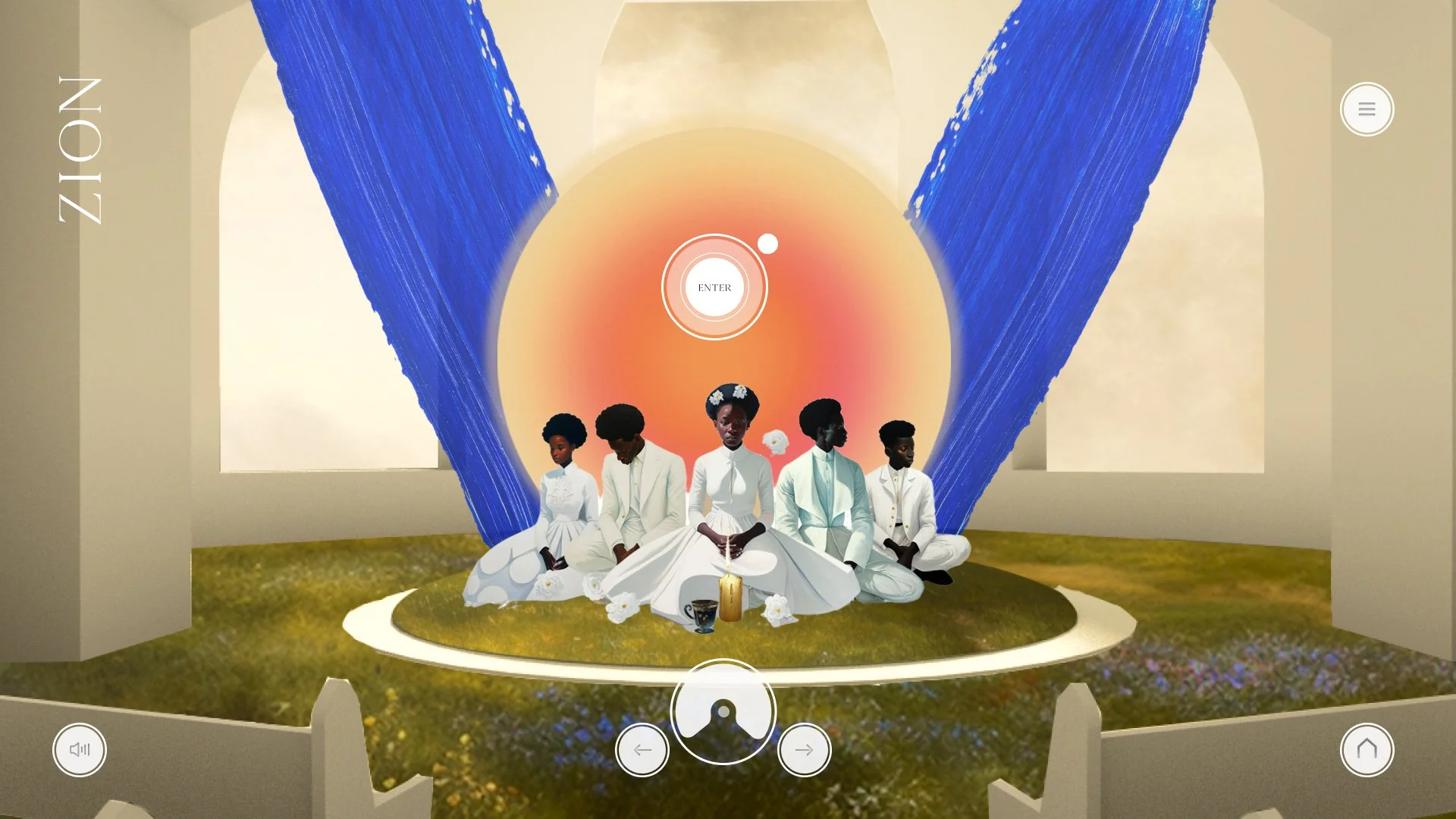
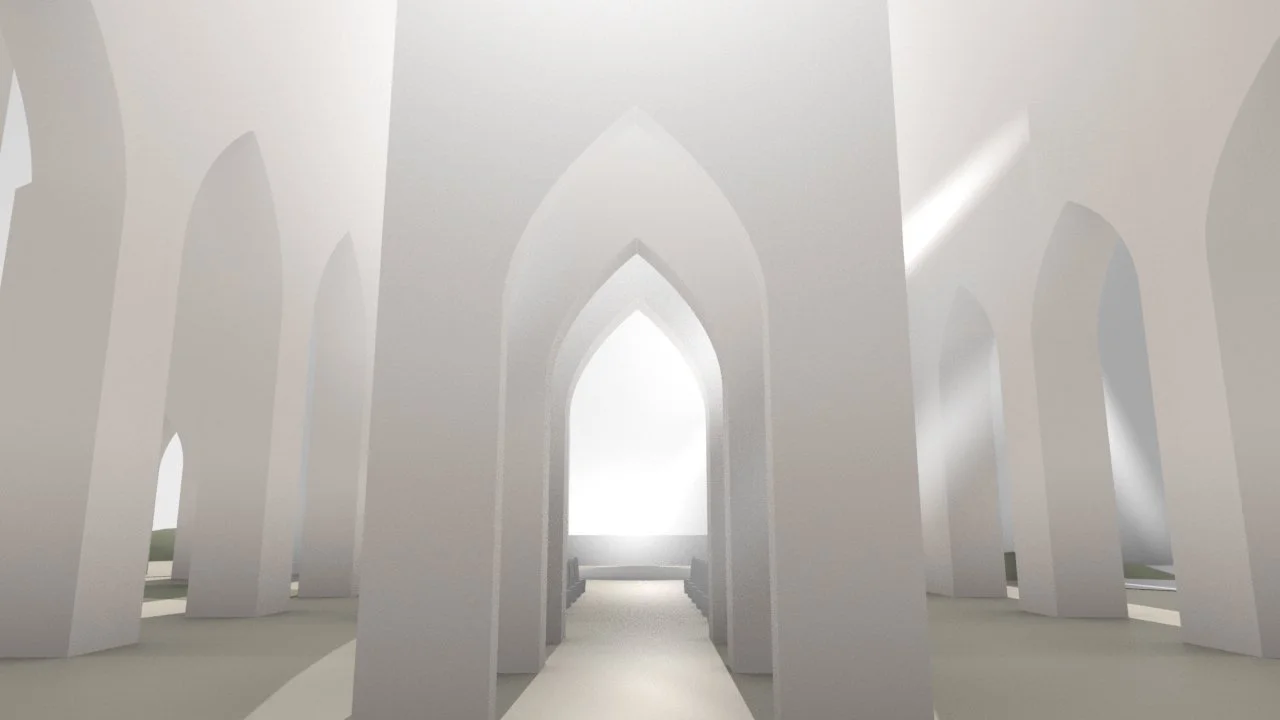
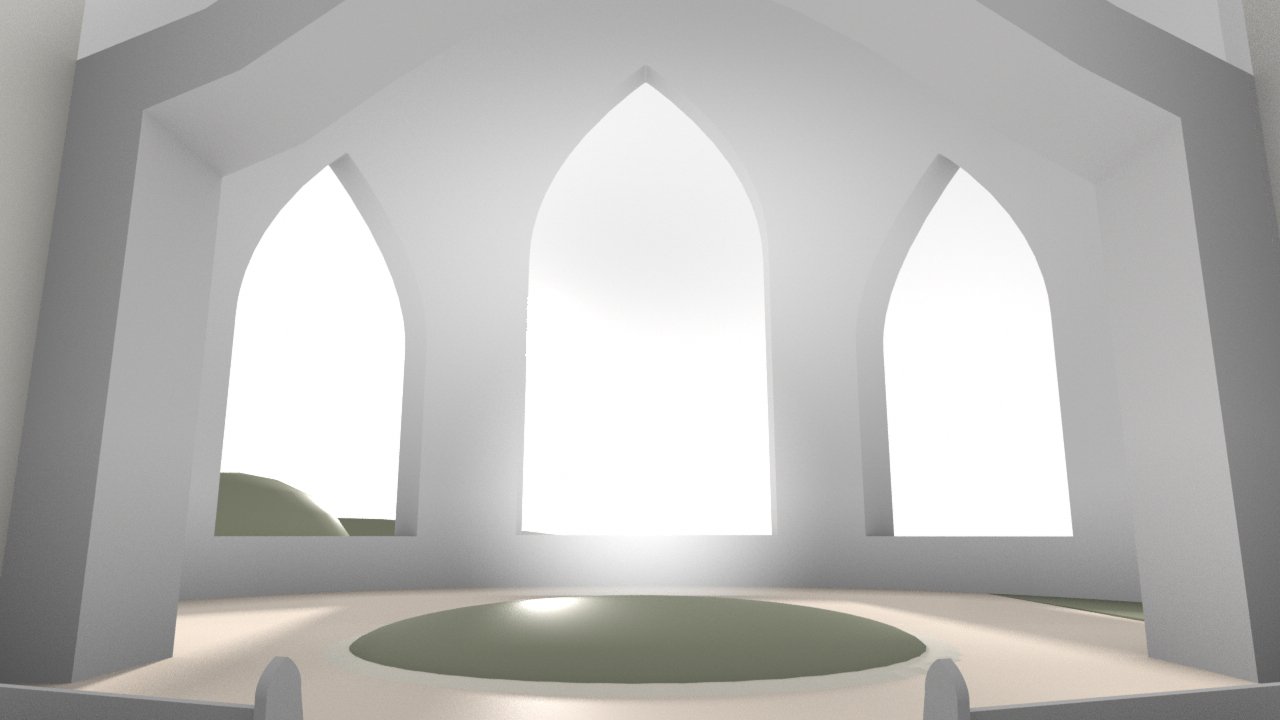
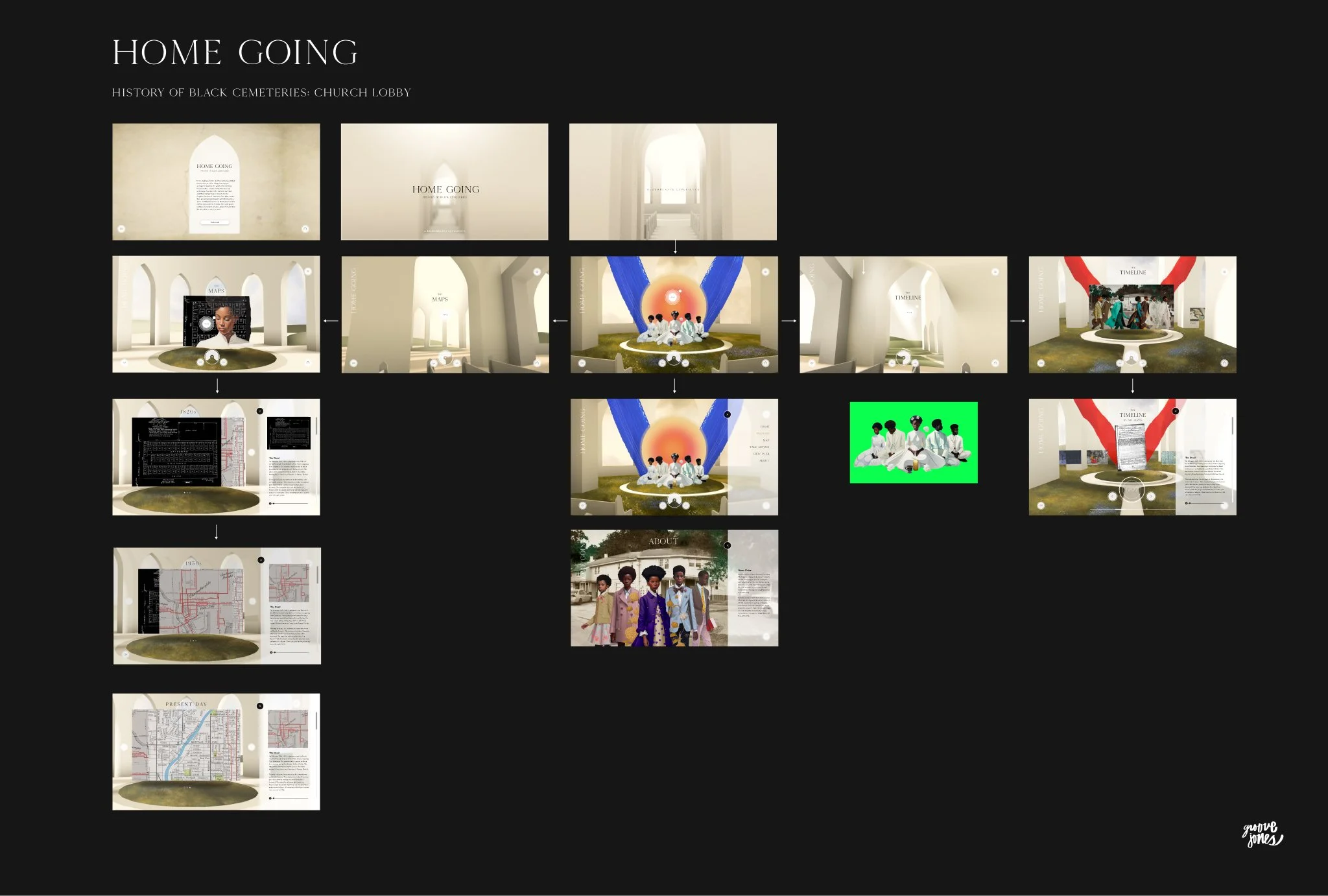
The journey opens in a luminous hall inspired by AME church architecture — white vaulted arches, tall windows, light pouring in. It was designed as a threshold: a place of reverence that asks the user to slow down before stepping into the history. From this central sanctuary, the space branches into three wings — the maps, the timeline, and the story itself — so navigation feels like moving through a memorial, not clicking through a website.
Designing the Space
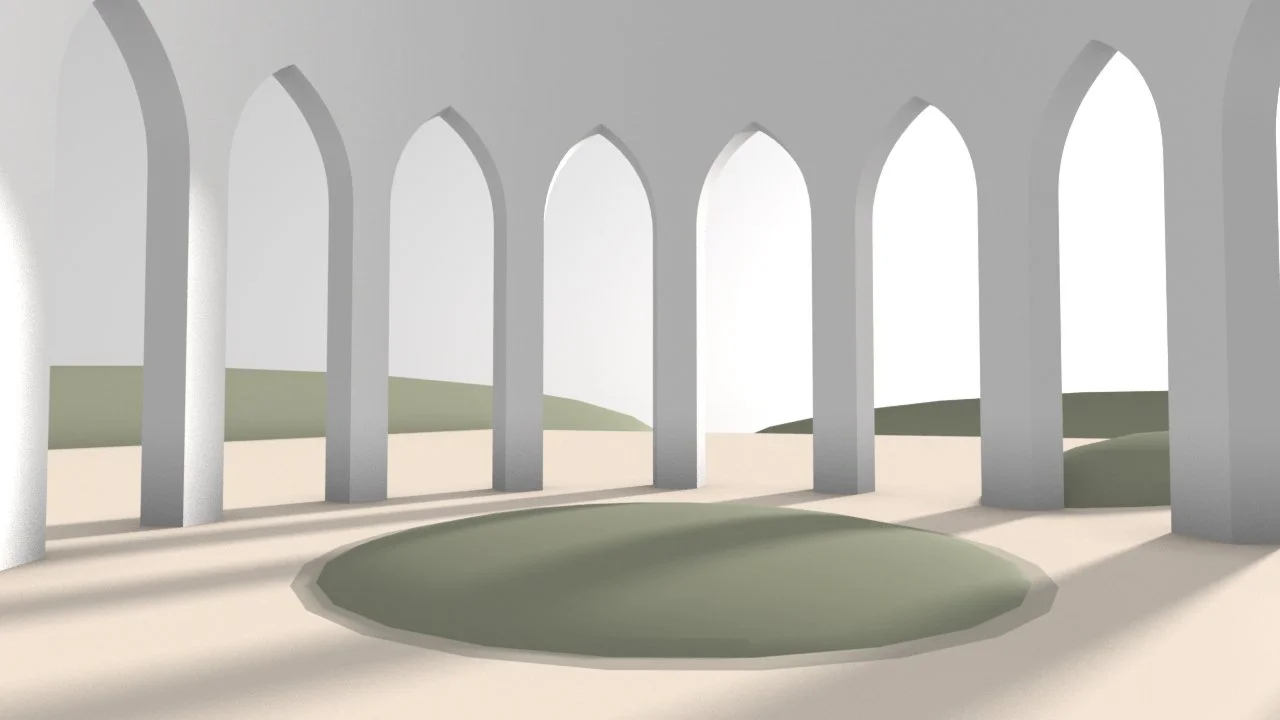
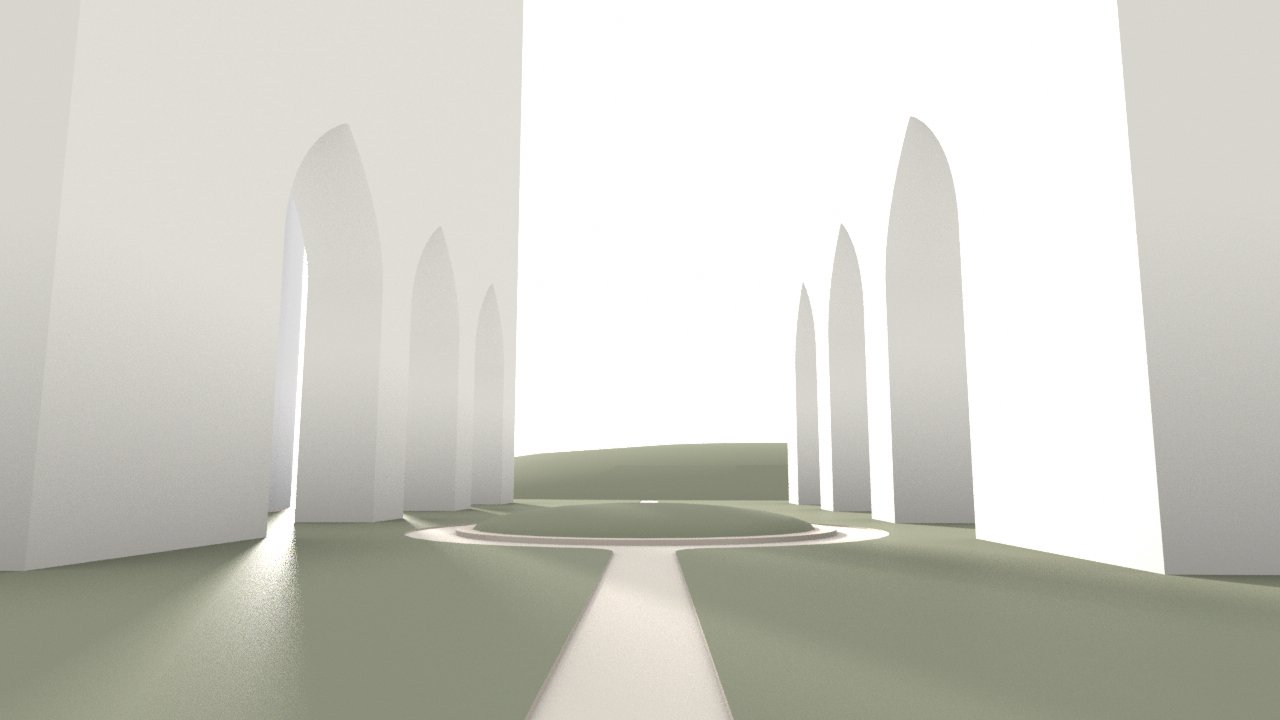
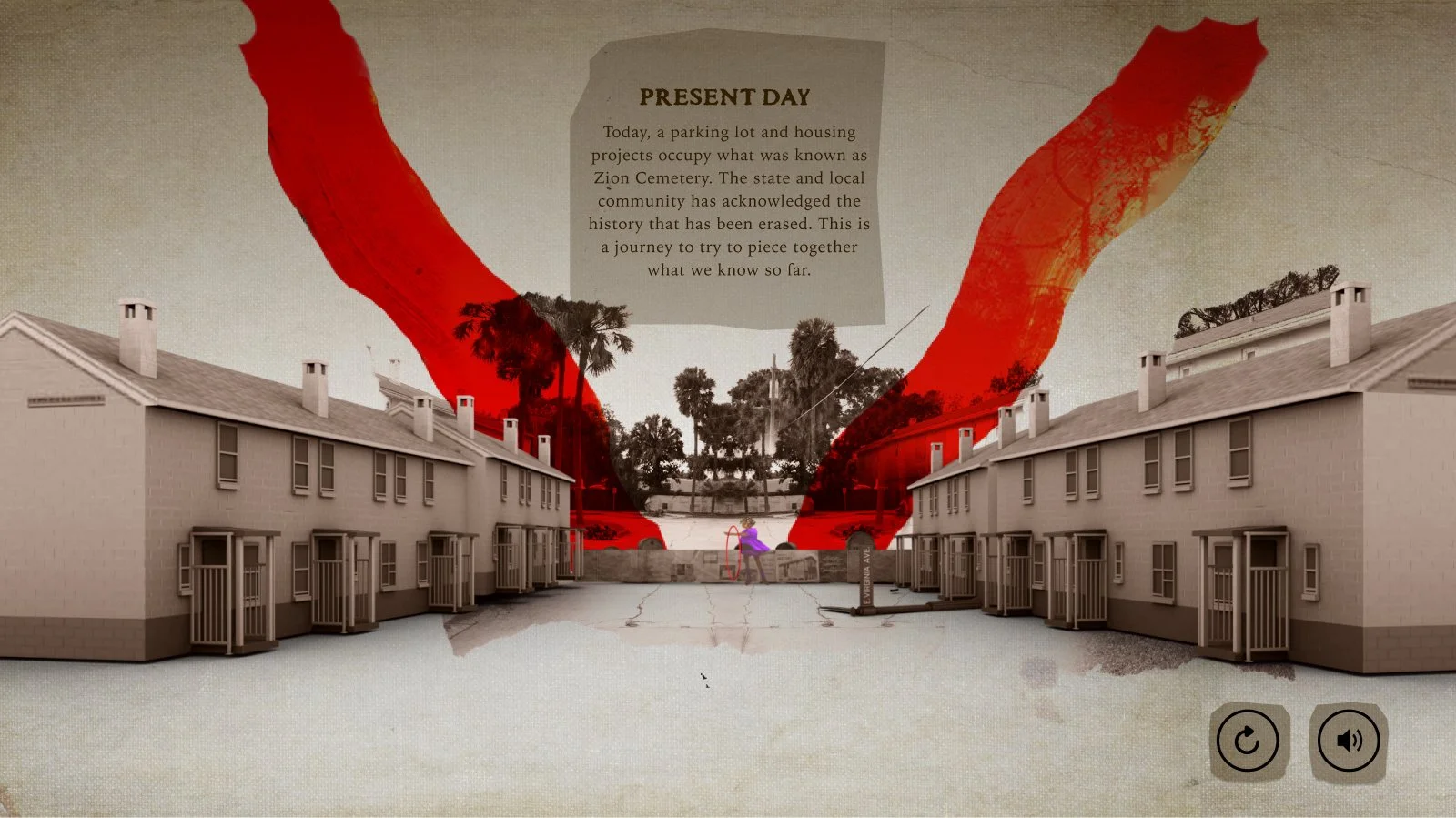
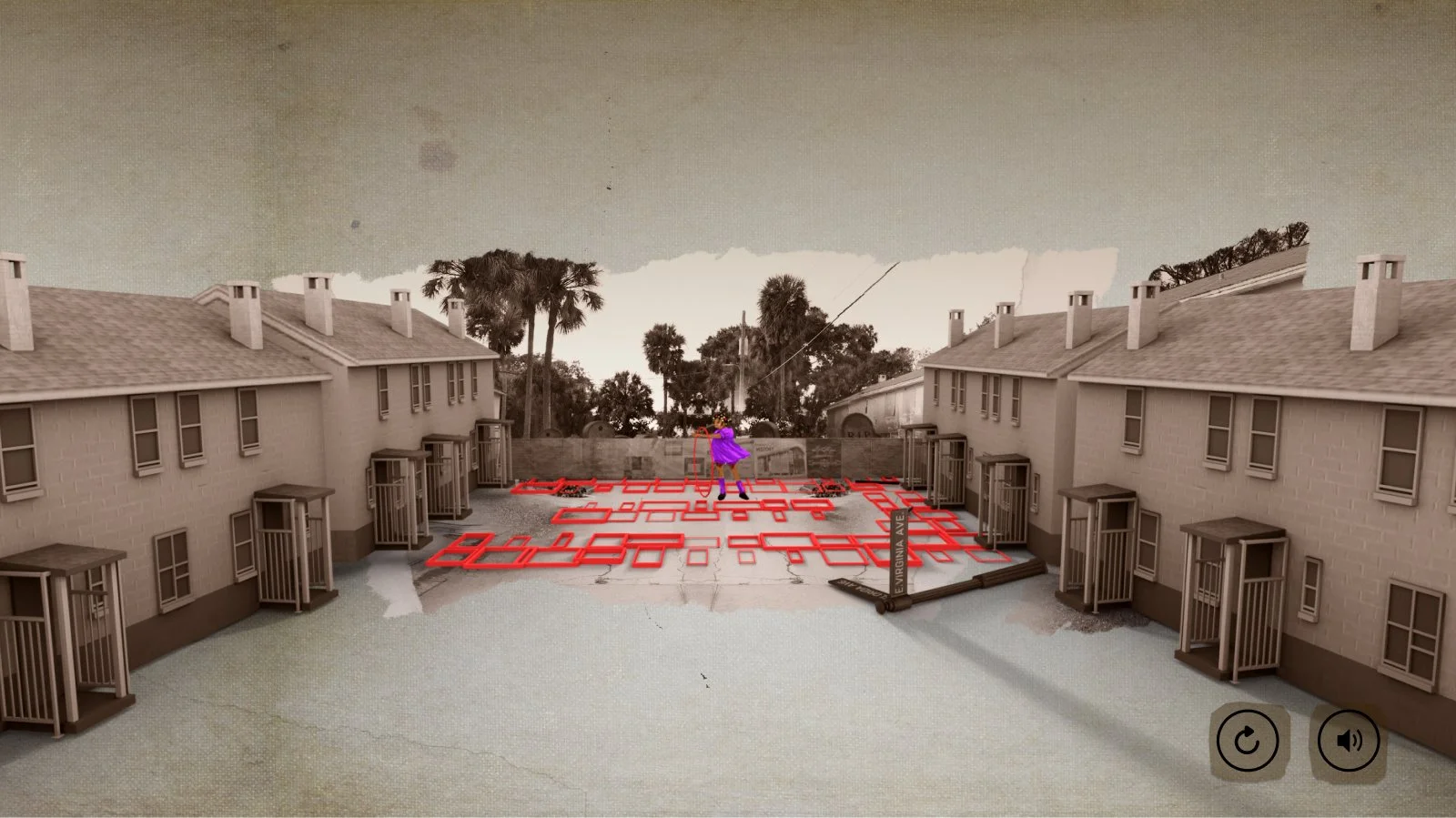
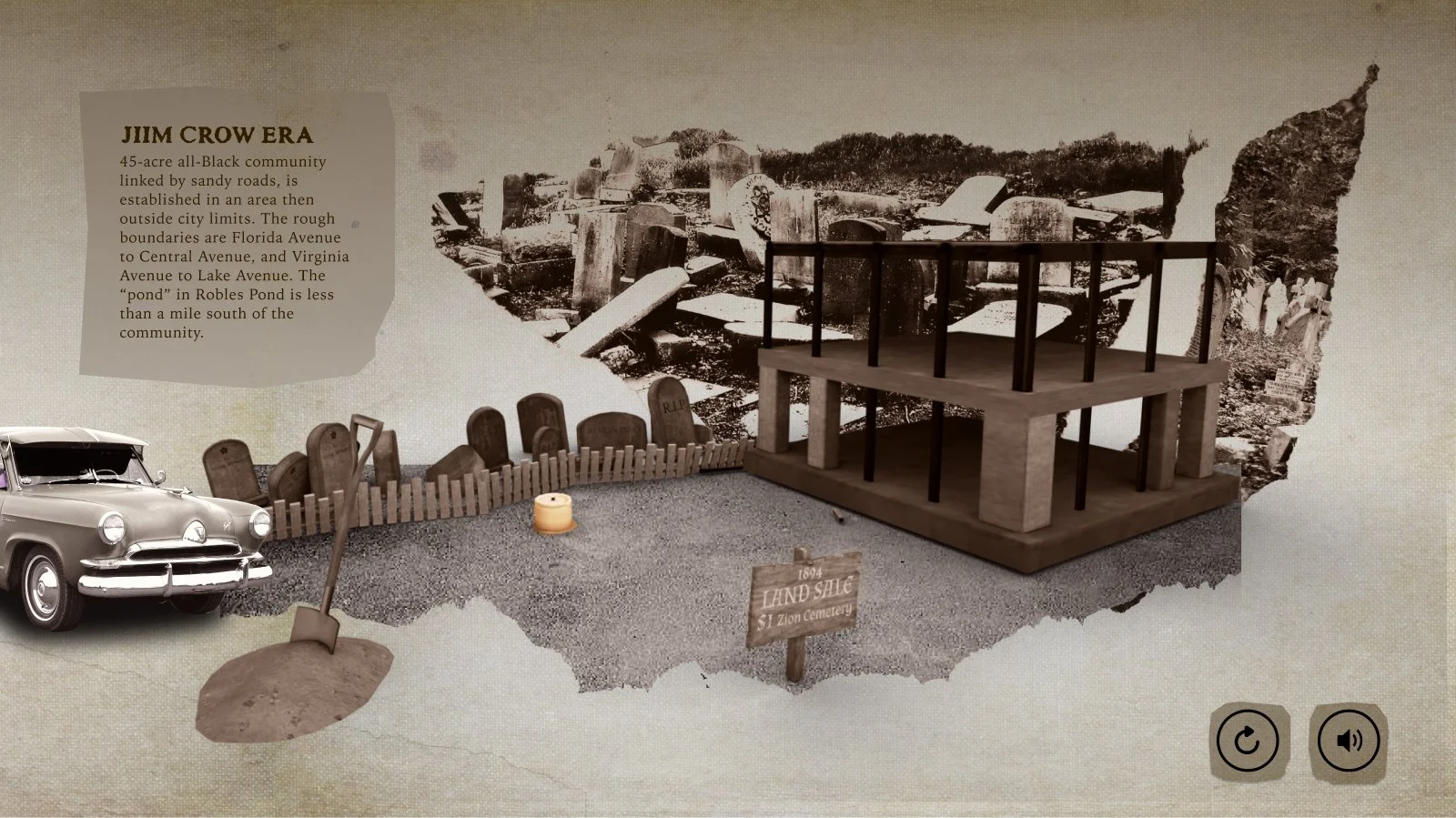
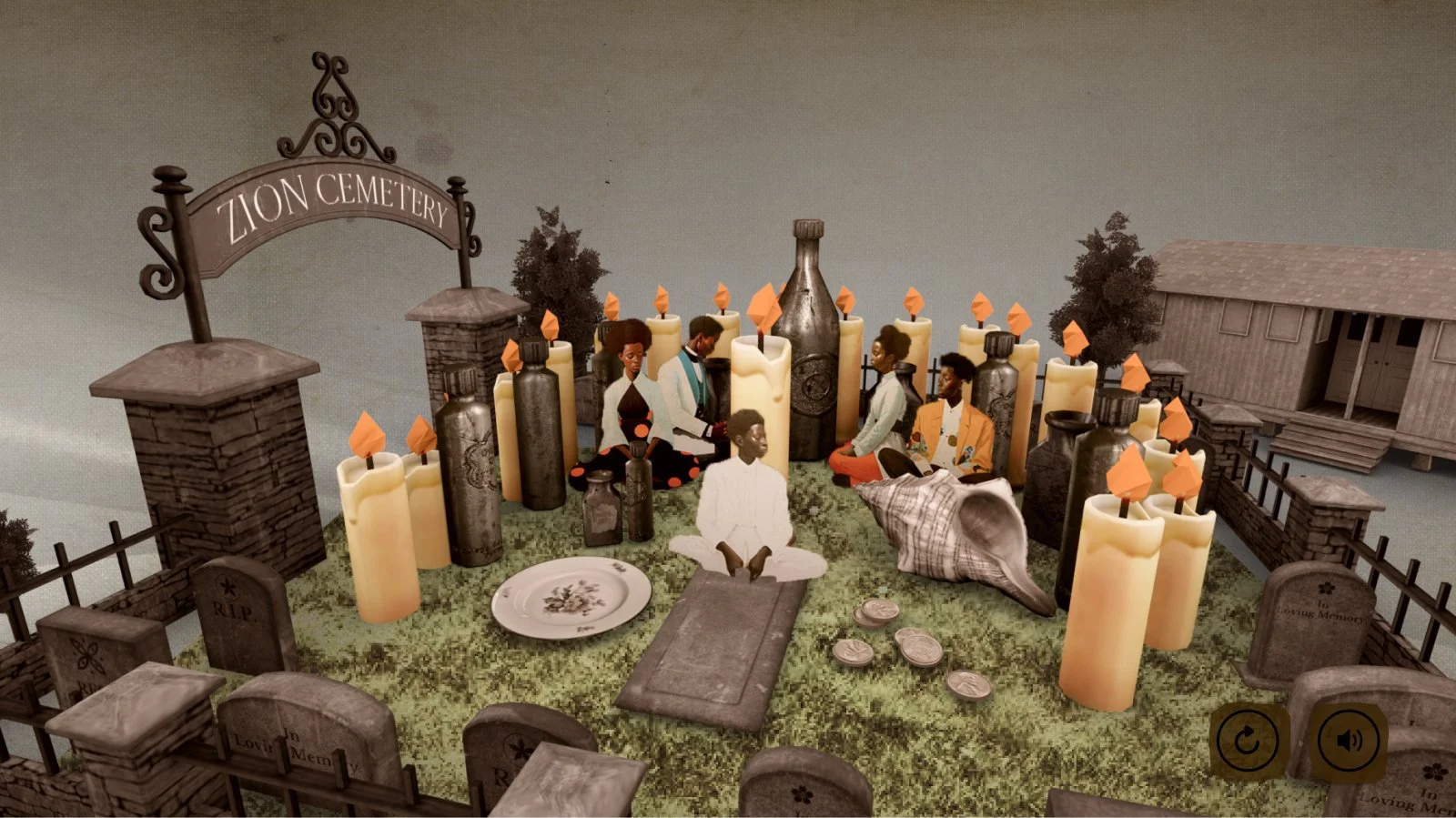
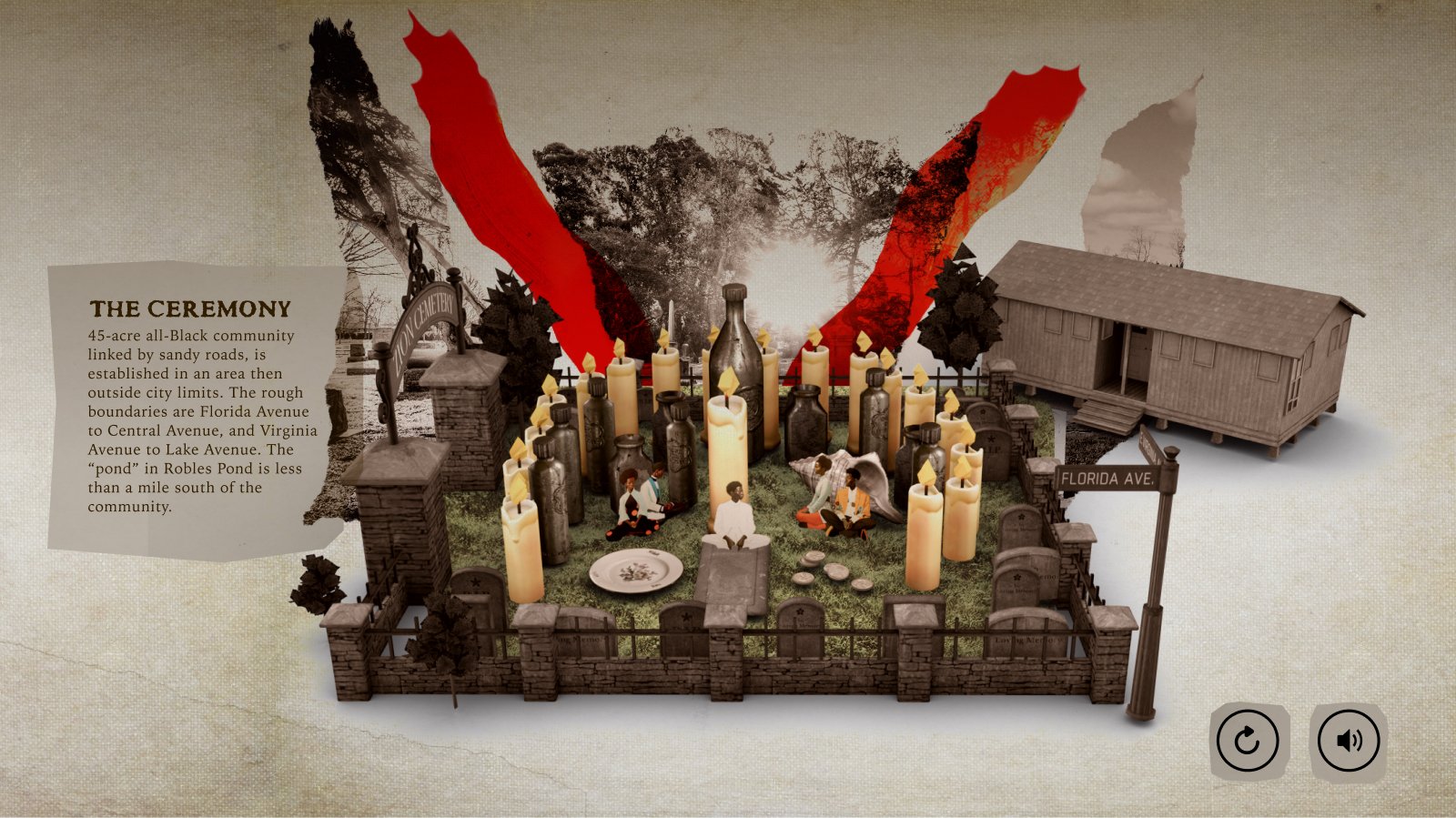
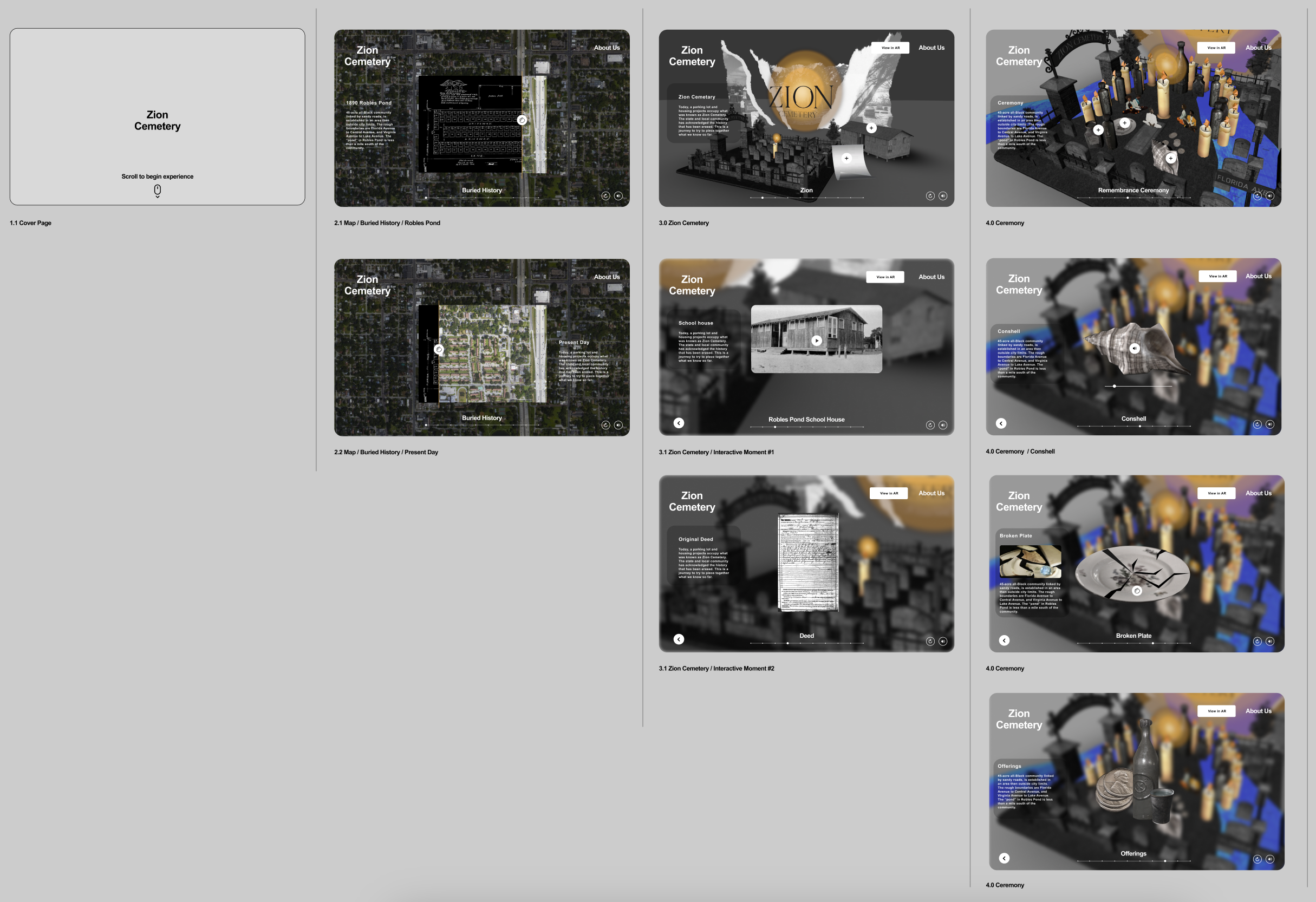
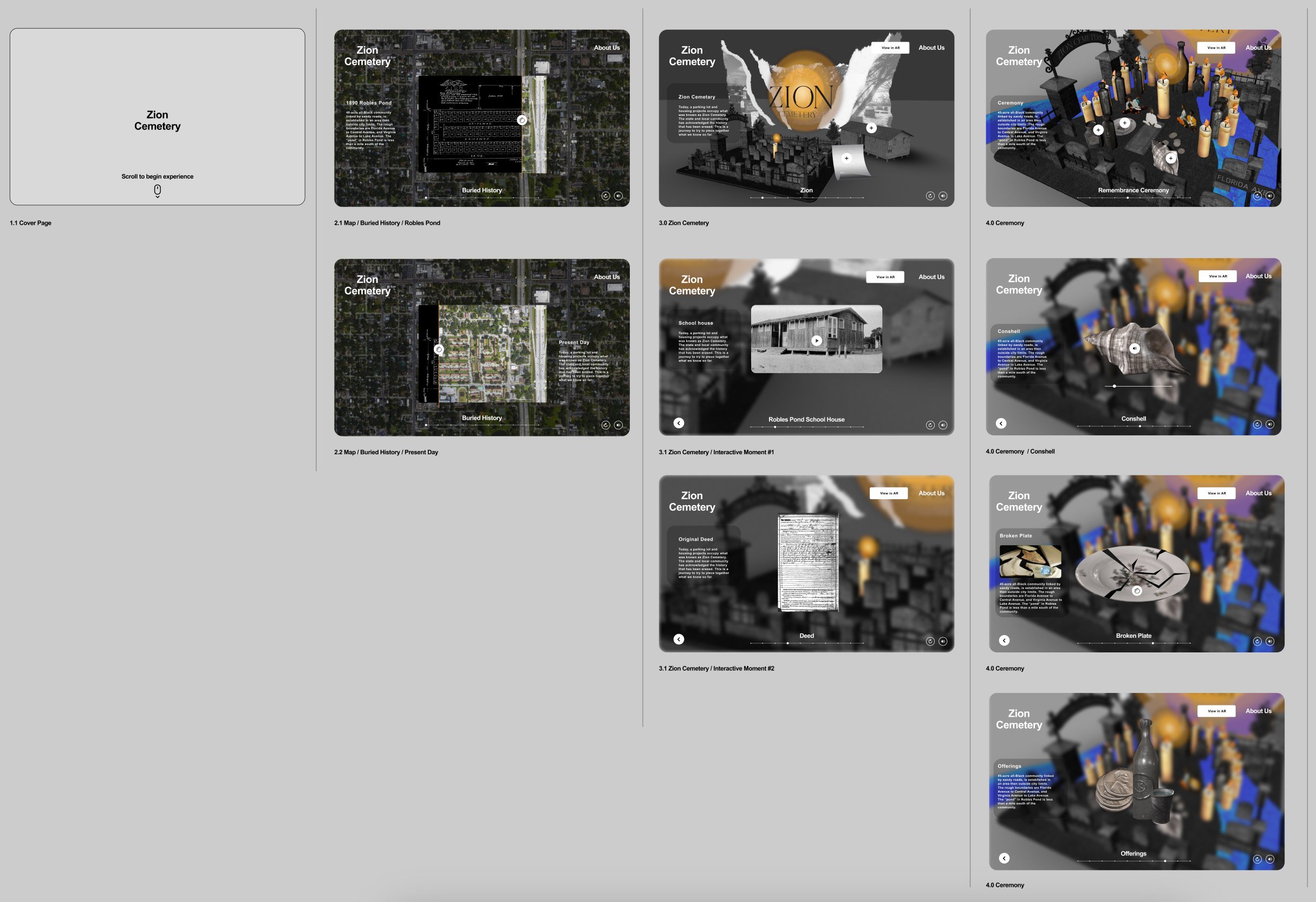
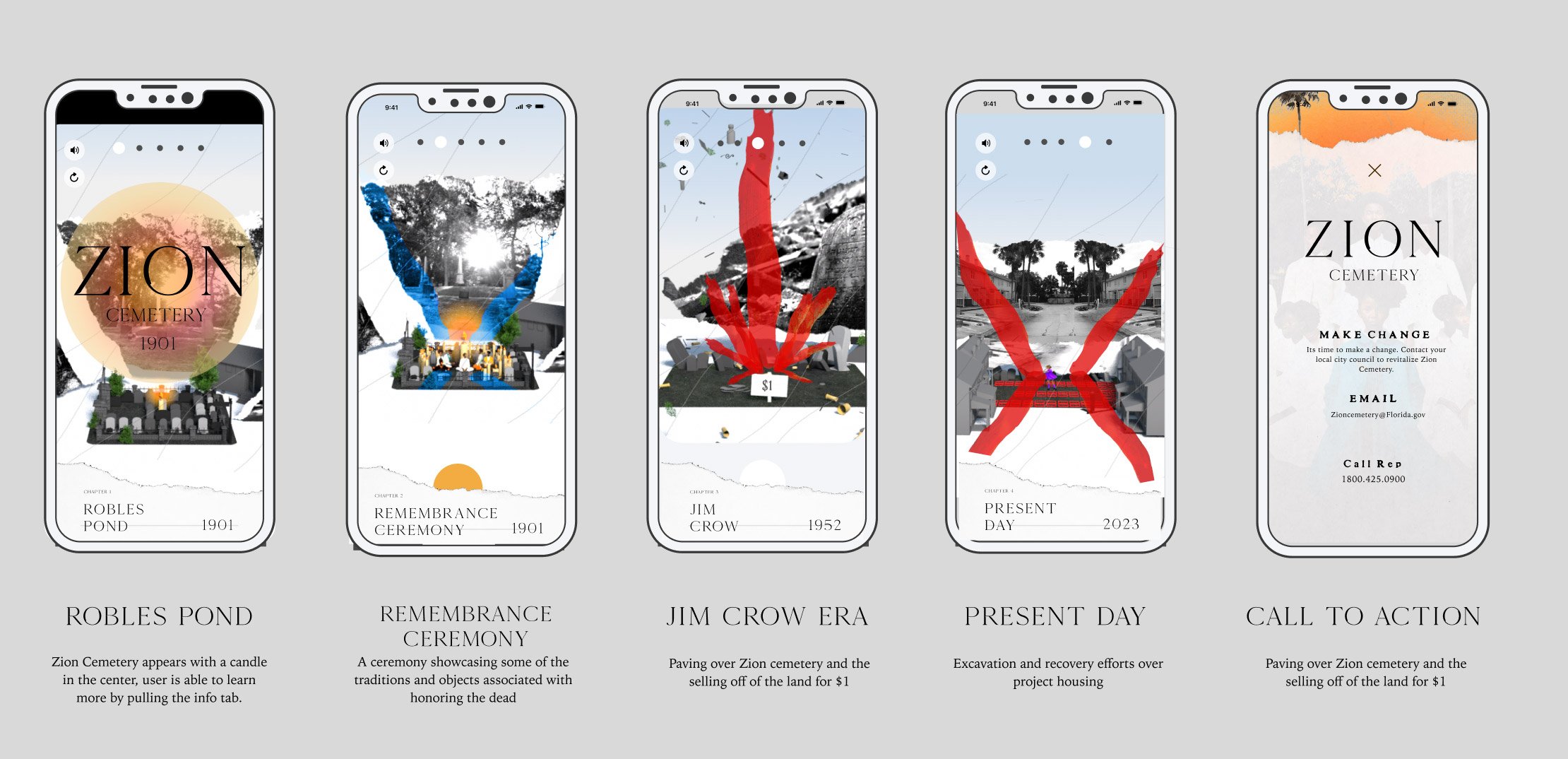
The narrative unfolds in three acts: the founding era and its burial ceremonies, the Segregation Era, and the Present Day. Interactive hotspots reveal ceremony traditions, land records, and first-person accounts, letting users set their own pace through the material. To the left of the sanctuary, historical maps trace the land transactions that erased Zion from the record; to the right, a scrollable timeline surfaces unarchived photos and articles year by year.
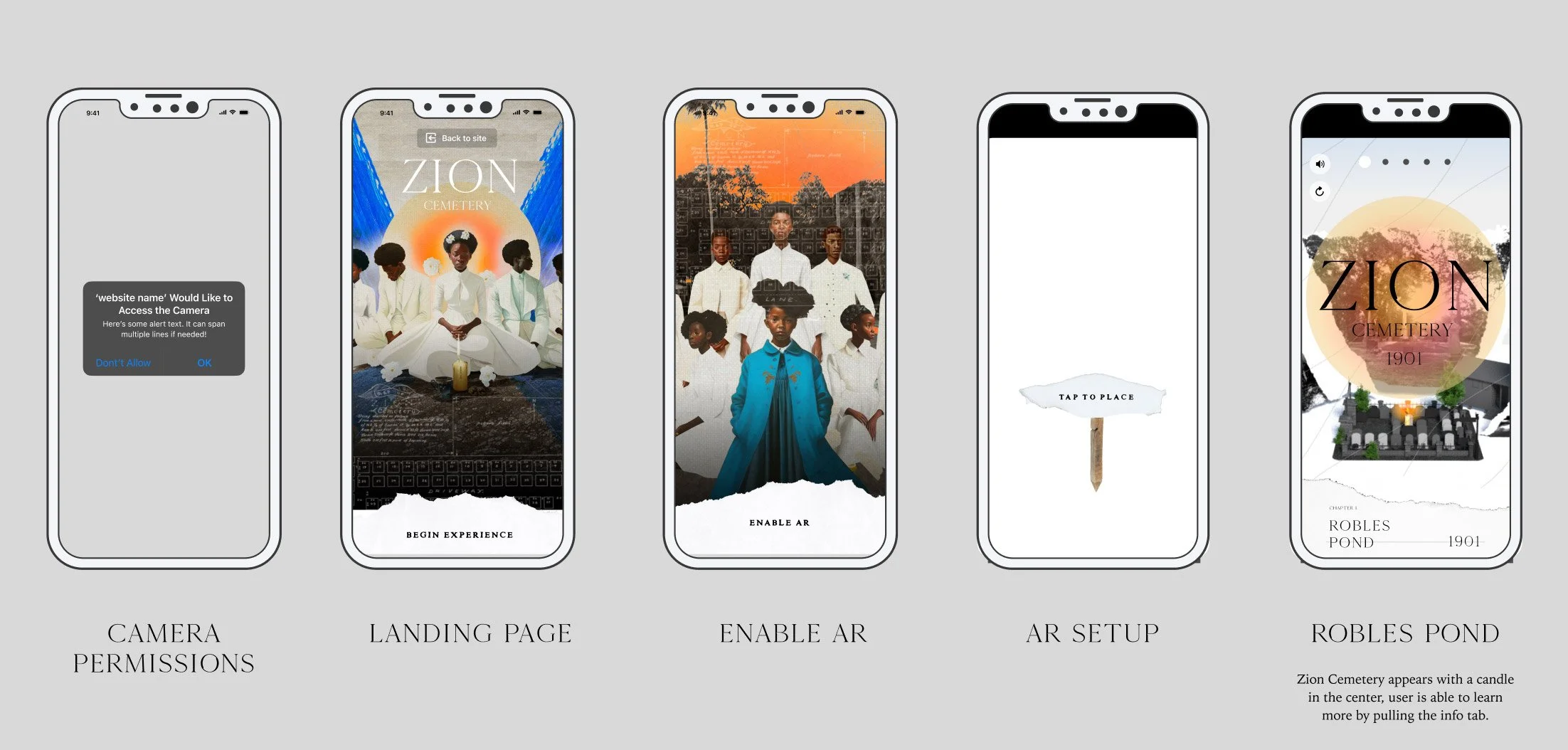
The interface system had to travel: the same story adapts across desktop WebGL, mobile web AR that lets users stand on the actual site and see what lies beneath, and a VR experience with hand tracking — no controllers — where users reach out and touch the story, guided by a spoken-word poem from Ebony Payne-English. The experience closes with a call to action, connecting users directly with their representatives.
Crafting the UI/UX Journey
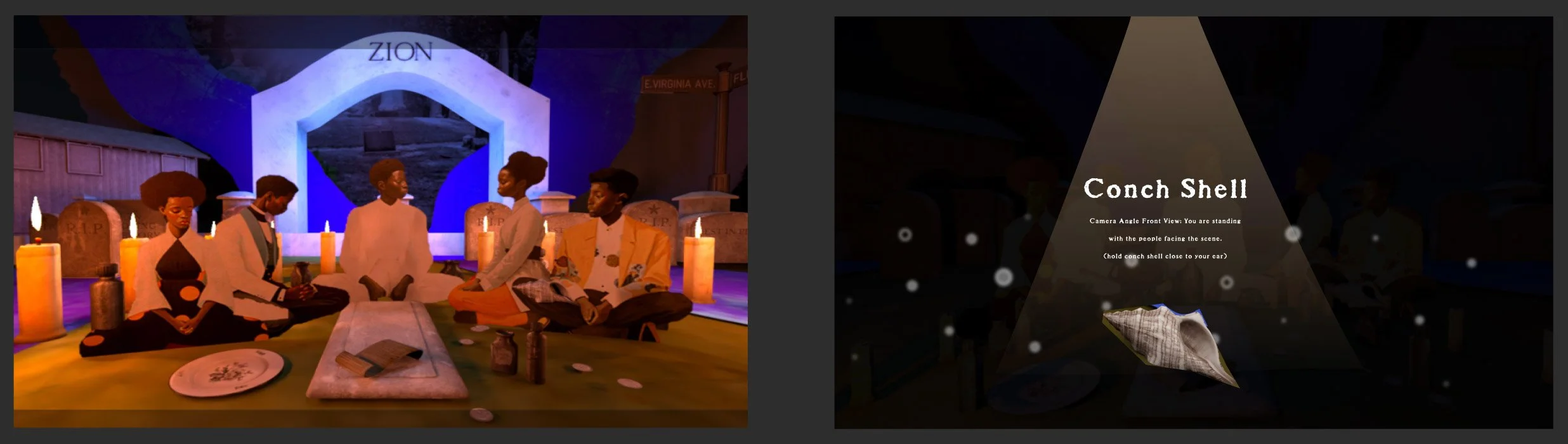
Virtual Reality
Special Angels wanted to further the story and tell it in virtual reality, creating new interactions not possible on the web.
The story of Zion was elevated further using the voice of Ebony Payne. Experience the immersive tale now on the Meta Quest Store
Augmented Reality
Each experience we created was also designed to be a launchpad for further engagement on other platforms. Our work on the story of Zion in Augmented Reality proved this by crafting a powerful narrative that enabled the Special Angels organization to secure more funding.
Impact & Awards
The project earned a Gold at the Vega Digital Awards (Cause-Related Websites & Mobile) and a Platinum at the Hermes Creative Awards (Interactive Media). The VR experience was released on the Meta App Lab, and the web experience remains live as an ongoing educational tool — part of a growing movement to recenter marginalized cemeteries through preservation and education.
Voices from the community shaped it throughout, including audio and video from Fred Hearns, President of the Zion Cemetery Preservation & Maintenance Society.
View More Projects
-
![Abstract digital artwork with pastel colors, pink, blue, yellow, and purple, featuring geometric shapes, clouds, and neon light effects.]()
Coca-Cola Dreamland
Concepts for a music festival.
-
![An indoor display showing the Texas Tech University logo and branding. There are flags with the Texas Tech logo hanging from the ceiling. The display features a large curved screen with various images of students and sports, and has three podiums with objects including a football and clothing with the university logo. The setting has a modern, professional look with a wooden floor and illuminated hexagon patterns.]()
Texas Tech VR Hub
Designing a high-fidelity, spatial portal to centralize campus engagement.
-
![walgreens]()
Walgreens: Relaxation Booth VR
Step into peaceful scenes meant to relax your senses.
-
![A large graphic banner at an outdoor sports event features female athletes wearing USA soccer jerseys with digital and illustrated artistic effects. Logos of Volkswagen and the USA Soccer team are visible. In the background, there are tents, a parking lot with cars, and a cloudy sky.]()
Volkswagen x US Soccer AR
Bringing a custom-wrapped EV to life through interactive stadium AR.
-
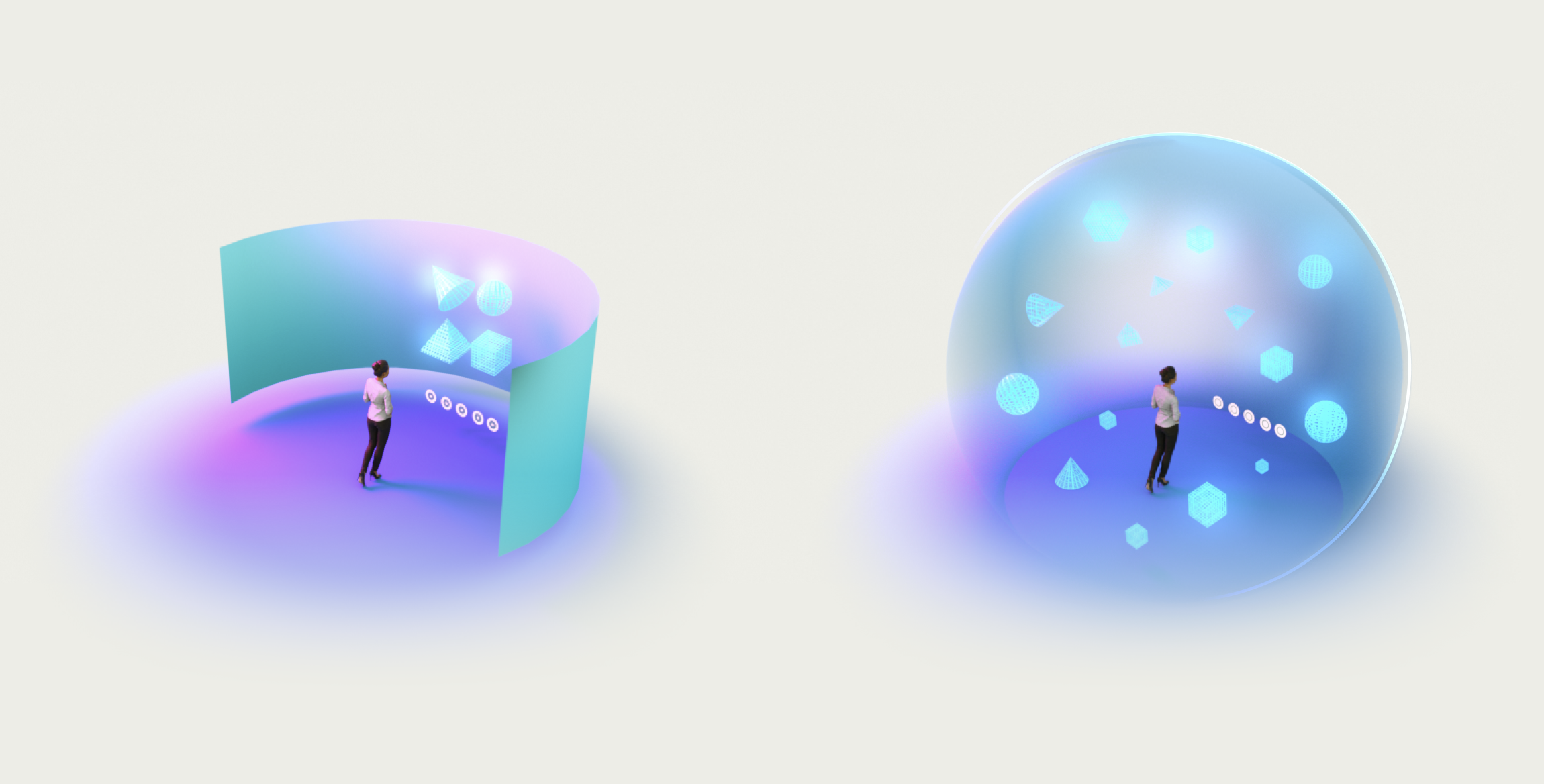
![Two people standing in separate futuristic circular digital environments with glowing blue geometric shapes and patterns.]()
Spatial Scenes
Visualizing the different virtual spaces a user can enter.
-
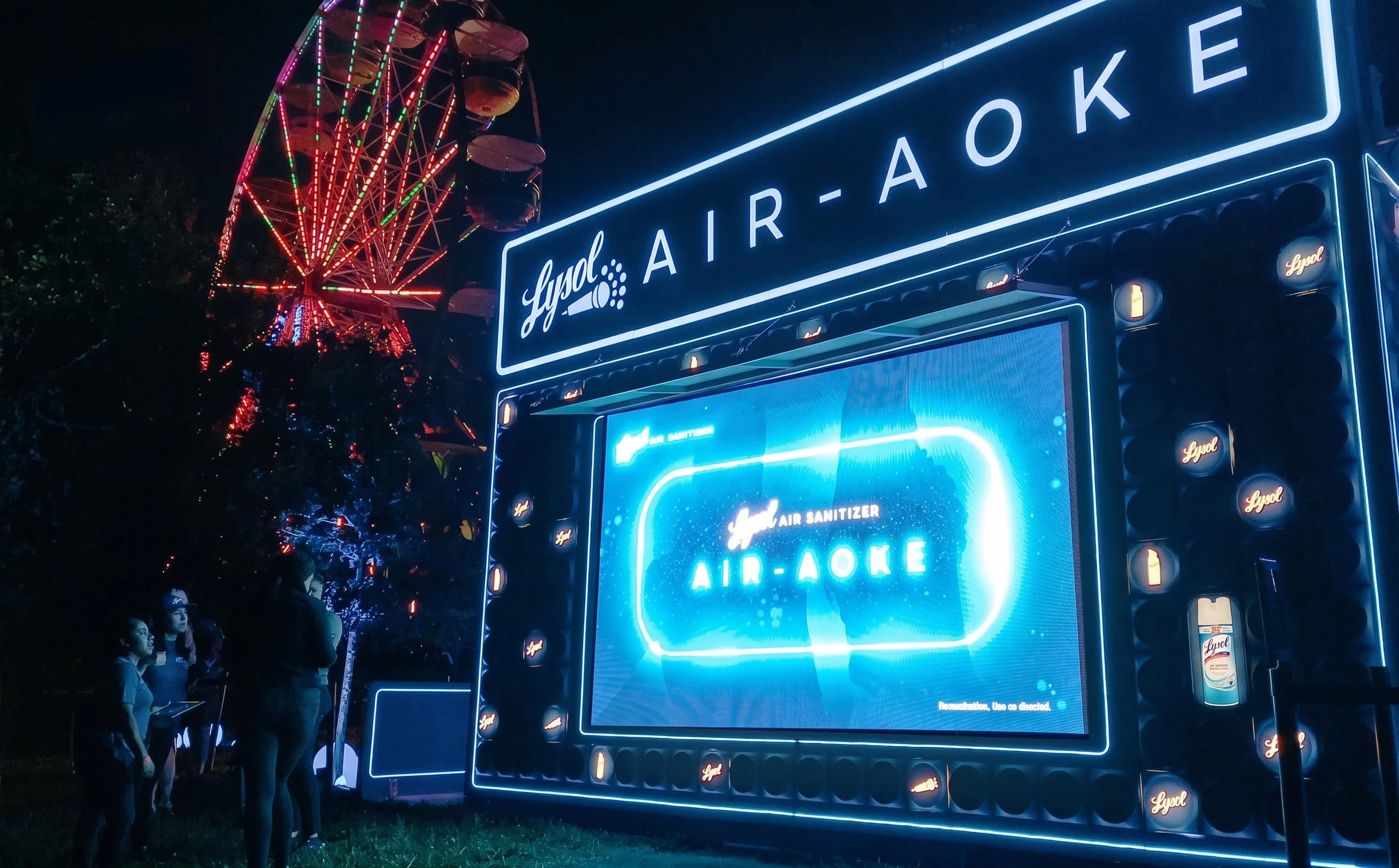
![People standing in front of a large illuminated sign with the Lyod air-aoke advertisement at night, and a Ferris wheel in the background.]()
Lysol: Air-Aoke XR
Making the invisible visible through real-time, interactive germ simulation.
-
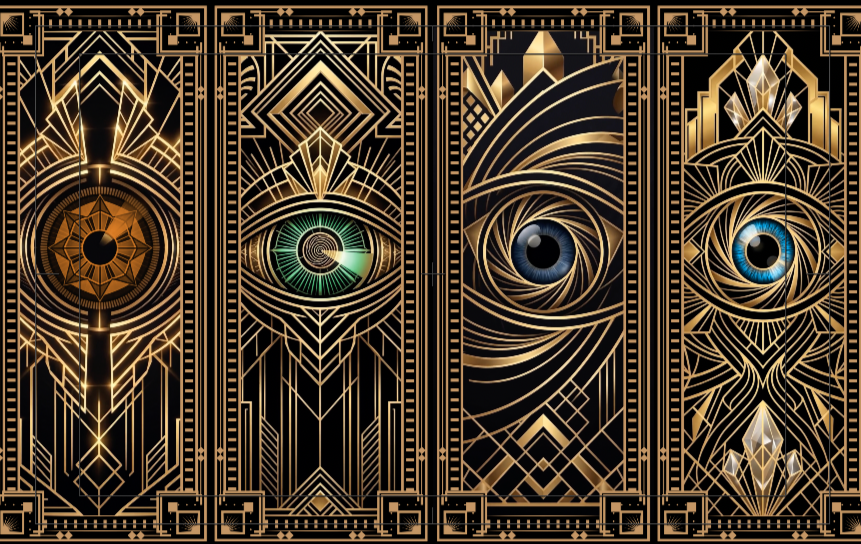
![A decorative geometric artwork featuring four stylized, intricately designed eyes with gold accents and black backgrounds, inspired by Art Deco style.]()
Alcon: Optometrist Gala
Art Deco-inspired motion graphics, user interfaces, and event print materials.
-
![Close-up of a modern, metallic, crescent-shaped object with glass-like sides, set against a black background.]()
Reality Apps
Branding for an immersive based developer studio.
-
![Mobile phone displaying a sign-up/login screen for a product called PRODUCTIO, featuring a piggy bank icon with a dollar sign, a welcome message, email and password fields, a log in button, and a sign-up link, with footer text about rights reservation.]()
Productio: FinTech
Streamlined user experience and interface for digital money management.
-
![A black background with red wavy lines and the word "VVOZ" in the center, with the 'O' stylized as a circle with wavy lines and a small red Wi-Fi signal above it.]()
VVOZ
Brand identity and product design for an AI voice-recognition tool.
-
![Three men modeling collared shirts, standing against plain backgrounds. The man on the left wears a black polo shirt with 'VEDANA' and a website printed on it. The middle man wears a white polo shirt with black accents on the collar and sleeves, and trousers. The man on the right, shown from the side, wears a black polo shirt with 'VEDANA' and a graphic design on the back.]()
Vedana
Premium pickleball apparel and sportswear label.
-
![A digital sci-fi illustration depicting a futuristic tunnel with concentric circles, lines, and data points converging at a bright central point, creating a sense of motion and depth.]()
Kest
Developing the visual tone and narrative pacing for a main title sequence.
-
![Abstract digital illustration of a stylized human heart, orange in color, with a smooth, minimalist design, surrounded by concentric glowing hexagons on an orange background.]()
ISN: RAVs
Crafting the narrative architecture, storyboards, and aesthetic direction for a corporate launch campaign.
-
![A children's book titled "The Golden Crayon" featuring colorful cartoon illustrations of three smiling crayons wearing crowns, lying on a white surface.]()
Storybooks
A collection of books illustrated by me.
-
![A stylized graphic of a woman with blue skin and long black hair, wearing a white dress, holding a yellow taco with blue sauce, surrounded by a circular Mexican-inspired design with red, green, and black elements, and the Mexican flag at the bottom.]()
How Dare You! Network
Crafting a defiant and cohesive visual ecosystem for a new independent podcast network.
-
![Black and white illustration of skyscrapers with the word 'OPAL' on the building, viewed from below.]()
Opal Properties
Establishing a sophisticated visual identity and premium aesthetic direction for an upscale property portfolio.
-
![Animated image of a Connect Four game on a basketball court, with a basketball heading towards the game board. The scoreboard shows the home team leading 15 to 16, with 17 seconds remaining on the clock.]()
State Farm: Cole's Connection
Leading the art direction, asset execution, and motion system for a gamified brand activation designed to drive user engagement.
-
![Graphic showing growth statistics for 2013 with yellow and gray text, including a large number indicating more than 550 million, and a 38% increase.]()
Ernst & Young: Year-End Performance
Designing and animating a high-energy kinetic typography film to visualize key corporate milestones and data.
-
![Circuit of the Americas]()
Circuit of the Americas
Animatic production, spatial layout, and style frame design for an immersive cinematic experience featuring 3D-scanned user integration.
-
![Illustration of a campgrounds with a wooden cabin, mountains in the background, and a sign that reads 'Camp Awesome']()
Bonfire: Seamless Cabin Bookings
Simplifying vacation planning through charming animation and fluid motion design.
-
![A red grid with four icons: a mountain and sun picture, a safe, a toothbrush, and a smartphone.]()
Propelio: Real estate App
Consolidating leads and market analysis into a single, intuitive tool for real estate agents.
-
![bankofamerica]()
Bank of America AR Mural: Every Goal Matters
Turning a Philadelphia bank branch into an interactive celebration of Team USA Soccer.
-
![A military helicopter flying through a smoky, orange-brown sky with dashed and solid arrows indicating its flight path.]()
Bell Helicopter AR
Interactive AR product demo and capability showcase.
-
![A shiny, metallic football helmet with a faceguard against a blue background.]()
Visa x NFL: Join the Team
Art direction and UX strategy for an immersive augmented reality campaign that seamlessly integrates fans into their favorite NFL roster.
-
![An illustrated rooftop view of a modern building with a blue rooftop pool area, red outdoor chairs, and a large red umbrella, with palm tree leaves partially visible in the foreground.]()
Mastercard x American Airlines: Mini-golf VR
Environments created for the most traveled locations.